navraj-singh-raQThW7TZLg-unsplash

Any questions?
Check out our FAQ

Frequently Asked Questions

Would you like to learn more about smart lighting for communities?

Our customer service is here for you.

c40bc08634ae36e3d9b417d4027756a5dede89fc

Our customer service team is available by email or you can leave us a message using the form on our contact page.

Contact us
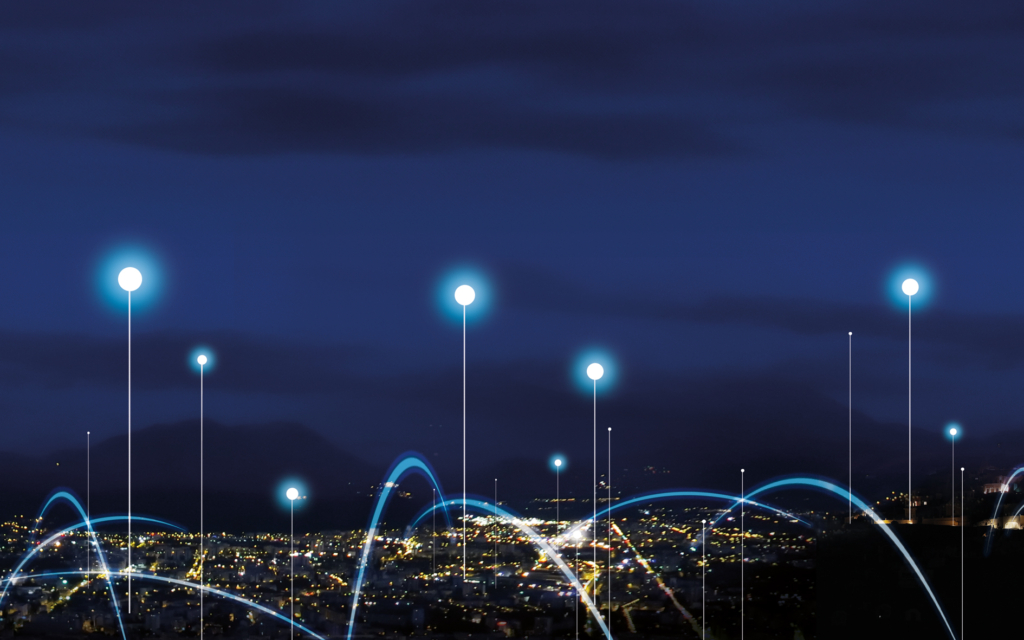
Remote management of public lighting is a solution that allows a lighting network to be controlled and monitored remotely via a software platform.

It allows lighting fixtures to be controlled, consumption to be monitored, faults to be detected, and lighting to be adapted to usage. Remote management transforms lighting into smart infrastructure that serves the Smart City.

Smart lighting enables:
- Energy savings of up to 50–70%
- Optimized maintenance
- Improved safety in public spaces
- Lighting adapted to specific uses
- A reduction in carbon footprint

Today, it is a major driver of energy transition for local authorities.
No.
Most remote management solutions are compatible with existing lighting fixtures thanks to retrofitting and open standards (Zhaga, DALI, TALQ, etc.).
A local authority can gradually modernize its lighting infrastructure without replacing all of its equipment.


- Cabinet management: control by circuit or sector via a network control unit.
- Light point management: control of each light fixture individually with detailed supervision.

The second offers finer management granularity, predictive maintenance, and better Smart City adaptability.
Yes.
Energy savings, reduced maintenance travel, and better control of facilities generally allow for a return on investment within a few years.
Remote management is now a sustainable budget management tool for cities.
Yes.
Smart lighting solutions are modular and can be deployed gradually, even on small lighting networks. Many rural municipalities already use remote management to reduce their costs and improve their management.
No.
Modern systems are designed to be easy for technical services to install and operate. They can be controlled from a computer or smartphone with support and training.
Yes.
The solutions are based on proven industry standards, secure protocols, and interoperable architectures. Real-time monitoring improves service continuity and anomaly detection.
The main criteria are:

- Interoperability with existing lighting fixtures
- Ease of installation and use
- Radio reliability and cybersecurity
- Field support
- Concrete references

A solution must be adapted to the territory's strategy and the desired management granularity.